 EN
EN
 AR
AR
 BG
BG
 HR
HR
 CS
CS
 DA
DA
 NL
NL
 FI
FI
 FR
FR
 DE
DE
 EL
EL
 HI
HI
 IT
IT
 JA
JA
 KO
KO
 NO
NO
 PL
PL
 PT
PT
 RO
RO
 RU
RU
 ES
ES
 SV
SV
 CA
CA
 TL
TL
 IW
IW
 ID
ID
 SR
SR
 SK
SK
 UK
UK
 VI
VI
 HU
HU
 TH
TH
 TR
TR
 FA
FA
 AF
AF
 MS
MS
 GA
GA
 HY
HY
 BN
BN
 MN
MN

How Does an Isolated Converter Improve Safety in High-Voltage EV Systems?
Jul 13, 2026
Hidden Electric Shock Risks Inside Unisolated High Voltage EV Power Circuits
Modern electric vehicles widely adopt 400 volt or even 800 volt high voltage battery platforms to lift charging speed and driving performance, yet many low cost power supply solutions ignore isolation design to cut material costs. Years of vehicle power supply engineering debugging work with complete road test records expose severe hidden risks brought by unisolated DC DC conversion structures. A complete vehicle engineering test case recorded by automotive electronic technicians shows a prototype EV equipped with non isolated converter suffered critical safety failure during bump road simulation tests. Continuous chassis vibration caused internal circuit micro cracks on the power module, creating direct conductive paths between 750 volt high voltage battery bus and 12 volt low voltage vehicle control circuits. High voltage current leaked into the whole vehicle low voltage harness, triggering system insulation protection lockout and emergency power cut during testing. Test personnel were at risk of accidental electric shock when touching vehicle body metal components before full power discharge. Industry power electronics specialists point out that any direct electrical connection between high voltage energy storage units and low voltage human accessible circuits violates core vehicle safety design logic, and minor component aging or vibration damage will evolve into fatal electric shock hazards without isolation barriers.
Transformer Based Physical Separation Creates Independent Voltage Loop Barriers
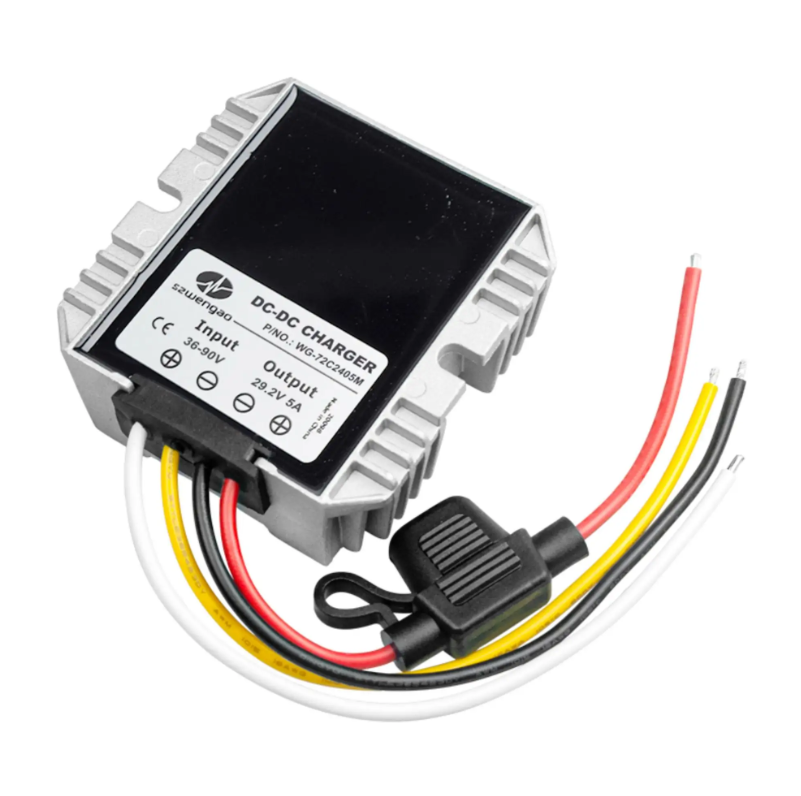
The core safety function of isolated converters originates from high frequency transformer physical separation between input high voltage side and output low voltage side, forming two fully independent closed current loops with no direct conductive wiring. Unlike non isolated Buck Boost or Buck Boost circuits that share common ground lines, isolated topologies such as flyback and full bridge transmit energy through alternating magnetic field instead of copper wire connection. High voltage direct current from EV battery packs first converts into high frequency alternating current on the primary winding of the built in transformer, then magnetic flux transfers energy to secondary winding to generate separated low voltage direct current for vehicle lights controllers and entertainment systems. No metal conductor links the high voltage loop and low voltage loop at any working stage, which fundamentally eliminates the possibility of high voltage current flowing into low voltage channels through internal circuit damage. This physical separation design is recognized as the most reliable passive safety barrier in vehicle power supply architecture, and all mainstream vehicle grade power system design manuals list transformer isolation as mandatory configuration for high low voltage conversion links.
Isolated Converters Restrict Dangerous Leakage Current Within Safe Thresholds
Global official EV safety standards including GB 18384 and EN ISO 6469 set strict quantitative limits on system insulation resistance and allowable leakage current to prevent electric shock accidents. Standard clauses specify the insulation resistance of high voltage circuits must maintain above one hundred ohms per volt under full load operation, and leakage current touching vehicle metal shells cannot exceed 0.75 milliamps under normal driving conditions. Comparative testing data collected from third party automotive certification laboratories shows non isolated converters produce leakage current above six milliamps under high temperature and humid working environments, far exceeding the safe threshold defined by regulatory bodies. Isolated DC DC converters add multi layer insulating shielding between transformer windings, effectively blocking stray coupling current generated by parasitic capacitance between high and low voltage loops. Long term aging cycle testing proves qualified isolated modules stabilize system insulation resistance over one hundred megaohms even after thousands of hours of high temperature vibration tests, fully complying with all cross border vehicle market access safety requirements for EV power subsystems.
Instant Fault Interception Prevents High Voltage Backflow Into Low Voltage Modules
Vehicle high voltage systems face multiple abnormal working conditions such as circuit short circuit overvoltage surge and component breakdown during daily operation, and isolated converters carry natural fault isolation capacity to avoid chain safety failures. If overvoltage breakdown occurs on the primary high voltage winding caused by battery impact or charging surge, the transformer magnetic isolation layer will block high voltage surge from penetrating into secondary low voltage circuits instantly. Non isolated structures lack this physical buffer, so any high voltage circuit fault will directly transmit extreme voltage to vehicle body control modules BMS and human touchable low voltage wiring harnesses, leading to permanent component burnout and potential electric shock risks for maintenance staff. Professional automotive power engineers explain that isolation structures coordinate with built in over current over temperature protection circuits inside converters to cut energy transmission within microseconds once abnormal voltage or current signals are detected, confining all fault energy to the high voltage battery side without spreading to passenger compartment electrical equipment.
Optimized EMC Performance Reduces Secondary Safety Failures Under Complex Vehicle Conditions
EV internal operating environments contain strong electromagnetic interference generated by drive motors inverters and charging piles, which easily trigger misjudgment of safety monitoring circuits and create indirect safety risks. Non isolated power circuits share common ground reference points, so common mode interference signals from high voltage power units directly transmit to low voltage signal lines, causing abnormal insulation alarm signals and even false emergency power cut during normal driving. Isolated converters integrate double layer shielding structures on transformer windings to attenuate common mode interference by more than forty decibels, separating noise transmission paths between high and low voltage subsystems completely. This optimized electromagnetic compatibility performance avoids safety function misoperation caused by interference, ensuring insulation monitoring systems and vehicle safety lockout mechanisms operate accurately under bumpy high temperature and high humidity road conditions. Stable anti interference performance also extends the service life of peripheral low voltage safety sensors and control boards, reducing unexpected vehicle downtime caused by power supply related signal faults.
Mature Vehicle Grade Isolated Converter Manufacturing Delivers Long Term System Safety
Stable safety performance of isolated converters for high voltage EV platforms relies on professional power supply manufacturers with long term R&D and vehicle grade production experience, and Wengao holds mature technology accumulation in this field. With nine years of focused power supply design and manufacturing experience, Wengao develops more than five hundred complete power product models covering isolated DC DC converters customized for new energy vehicle high voltage systems. All vehicle grade isolated converter products pass strict insulation vibration high and low temperature aging testing before delivery, adopting reinforced transformer insulating materials and multi stage protection circuits to match 400 volt and 800 volt EV architectures. The brand maintains stable product supply channels covering more than one hundred thirty countries and regions, providing customized isolation power solutions for automotive manufacturers new energy equipment suppliers and engineering vehicle enterprises. Compared with general industrial power modules lacking vehicle grade optimization, Wengao’s EV dedicated isolated converters maintain consistent insulation safety and anti interference performance after long term continuous driving cycles, building a stable core safety barrier for global high voltage electric vehicle power systems.
Recommended Products
Hot News
-
Application Advantages of Non-Isolated BUCK Converters Compared to Isolated Step-Down Converters
2024-01-23
-
DC-DC Converters Showcase Remarkable Advantages in Outdoor Off-Grid Applications
2024-01-23
-
DC to DC Battery Charger - Wide input and Noise immunity for dual battery system applications
2024-01-19