 EN
EN
 AR
AR
 BG
BG
 HR
HR
 CS
CS
 DA
DA
 NL
NL
 FI
FI
 FR
FR
 DE
DE
 EL
EL
 HI
HI
 IT
IT
 JA
JA
 KO
KO
 NO
NO
 PL
PL
 PT
PT
 RO
RO
 RU
RU
 ES
ES
 SV
SV
 CA
CA
 TL
TL
 IW
IW
 ID
ID
 SR
SR
 SK
SK
 UK
UK
 VI
VI
 HU
HU
 TH
TH
 TR
TR
 FA
FA
 AF
AF
 MS
MS
 GA
GA
 HY
HY
 BN
BN
 MN
MN

Why Is a 48V to 12V Converter Necessary for Telecom and Data Center Equipment?
The Backbone of Reliable Telecom and Data Center Power
Walk into any telecom exchange or hyperscale data center and you will hear the same quiet hum of thousands of power supplies working in unison. At the heart of this orchestrated electrical symphony is a seemingly simple voltage: 48V DC. This voltage level has become the global backbone of critical infrastructure, not by accident, but through decades of proven engineering. A field engineer once shared a story with me about a major cellular site that experienced a cascading rectifier failure. The root cause was traced back to an attempt to power sensitive 12V network monitoring gear directly from a jerry rigged 48V supply without proper conversion. That single oversight caused intermittent resets that took two days to isolate. The lesson is clear: reliable power conversion is not an accessory; it is the foundation of uptime. When every millisecond of downtime can cost thousands of dollars, understanding why a dedicated 48V to 12V converter is essential becomes a business imperative, not just a technical checkbox.
Why 48V Became the Standard in Critical Infrastructure
To appreciate the converter, you first have to understand why 48V dominates. The choice traces back to the early days of telephone networks, where 48V was selected as a compromise between safety and efficiency. Voltages below 60V DC are generally considered safe from a shock hazard perspective, removing the need for the same stringent conduit and protection rules that govern AC mains. This alone saves substantial deployment costs. At the same time, 48V is high enough to efficiently transmit power over the long cable runs typical in telecom outside plant and large data halls, minimizing resistive losses compared to a 12V distribution scheme. Industry standards such as ETSI EN 300 132-2 define the normal service voltage range at the interface as -40.5V to -57.0V DC. This wide operating window reflects the reality of battery backup systems, where voltage can dip during a deep discharge and rise sharply during equalization charging. Any conversion equipment placed in this path must handle that entire range gracefully without glitching. That technical requirement is far more demanding than it first appears and is exactly where high quality 48V to 12V converters distinguish themselves from commodity alternatives.
The Challenge of Powering 12V Equipment in a 48V World
Ironically, even as the power backbone settled on 48V, an entire ecosystem of critical equipment evolved around 12V. Think of the countless routers, small form factor switches, security cameras, environmental sensors, and edge computing nodes deployed inside telecom cabinets and data center racks. Many of these devices are derived from enterprise or automotive designs where 12V is the native input. Simply inserting a cheap buck regulator to drop 48V to 12V creates a single point of failure with hidden risks. A power architect I collaborated with on a colocation retrofit project found that off the shelf converter modules sourced without proper qualification exhibited input voltage overshoot ringing that, over a period of months, degraded the input capacitors on connected 12V devices. The result was a slow, creeping failure that mimicked random equipment lockups. A purpose built 48V to 12V converter, in contrast, incorporates input filtering, transient suppression, and tightly regulated output specifically designed for the electrically noisy environment of a facility filled with variable frequency drives, generator transfer switches, and high current switching loads. Ignoring these environmental factors is like putting a passenger car engine into a heavy truck and expecting it to survive.
Technical Advantages of a Dedicated 48V to 12V Converter
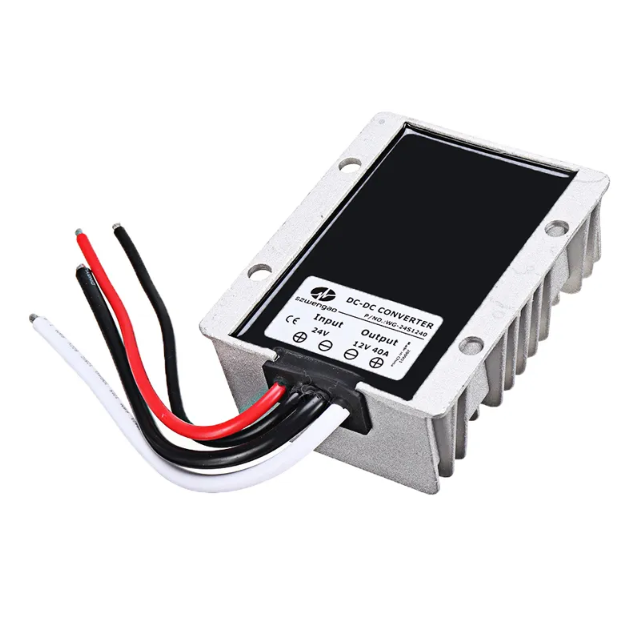
From a purely engineering standpoint, a dedicated converter brings multiple layers of protection and performance that generic solutions cannot match. Galvanic isolation is a critical feature often overlooked. By using a transformer based topology rather than a simple non isolated buck converter, the device electrically separates the 48V bus from the sensitive 12V loads. This prevents ground loops and common mode noise from corrupting data signals on Ethernet and sensor wiring. Efficiency is another battlefield. Premium converters utilizing synchronous rectification and advanced planar magnetics routinely achieve efficiencies above 95 percent across a wide load range, dramatically reducing the thermal burden inside sealed NEMA enclosures where active cooling is impossible. According to a report published by the Uptime Institute, power conversion losses remain one of the top three contributors to wasted energy in data centers, and each percentage point improvement in efficiency directly impacts the Power Usage Effectiveness metric that operators obsess over. Additionally, features like remote on off control, output voltage trim, and power good signaling allow facility managers to integrate the converter into a larger power sequencing and monitoring scheme, enabling graceful shutdown during extended outages instead of abrupt, potentially corrupting power loss.
Real World Reliability and Cost Savings
The financial argument for specifying a proper 48V to 12V converter is just as compelling as the technical one. Consider the total cost of ownership over a ten year deployment cycle. An inexpensive converter that lacks conformal coating, wide temperature rating, and proper heatsinking may save a few dollars at purchase time but can become a recurring maintenance nightmare. I recall a distributed antenna system rollout along a coastal highway where salt fog ingress into unsealed converters led to creeping corrosion failures after just eighteen months. The truck rolls, site access fees, and lost service revenue dwarfed any upfront savings. In contrast, facilities that invest in converters with a Mean Time Between Failure measured in millions of hours and backed by thorough qualification testing see a dramatically lower total cost. Beyond reliability, the right converter unlocks operational flexibility. A base station cabinet that has a clean, stable 12V rail can host a wider variety of auxiliary equipment without custom engineering, accelerating the deployment of new revenue generating services. This agility translates directly into competitive advantage in a market where speed to service is everything.
Building a Future Proof Power Architecture with the Right Partner
As networks densify and edge computing pushes processing power deeper into the field, the dependency on reliable intermediate power conversion will only intensify. The migration to 5G and the proliferation of Open RAN architectures mean more radios, more fiber multiplexers, and more processing nodes, all demanding spot on 12V from a 48V plant. Designing for this future requires more than just selecting a part number from a catalog; it demands a partner with deep domain expertise and proven manufacturing discipline. Wengao Electronics has built its reputation by delivering exactly this kind of high reliability power conversion, offering a comprehensive range of 48V to 12V converter modules that meet the stringent input transient, efficiency, and environmental requirements demanded by telecom carriers and data center operators globally. With in house engineering, full supply chain traceability, and a manufacturing operation geared for consistent quality at scale, Wengao Electronics provides the certainty that mission critical infrastructure will stay online year after year, turning power conversion from a potential vulnerability into a strategic asset.
Recommended Products
Hot News
-
Application Advantages of Non-Isolated BUCK Converters Compared to Isolated Step-Down Converters
2024-01-23
-
DC-DC Converters Showcase Remarkable Advantages in Outdoor Off-Grid Applications
2024-01-23
-
DC to DC Battery Charger - Wide input and Noise immunity for dual battery system applications
2024-01-19