
 EN
EN
 AR
AR
 BG
BG
 HR
HR
 CS
CS
 DA
DA
 NL
NL
 FI
FI
 FR
FR
 DE
DE
 EL
EL
 HI
HI
 IT
IT
 JA
JA
 KO
KO
 NO
NO
 PL
PL
 PT
PT
 RO
RO
 RU
RU
 ES
ES
 SV
SV
 CA
CA
 TL
TL
 IW
IW
 ID
ID
 SR
SR
 SK
SK
 UK
UK
 VI
VI
 HU
HU
 TH
TH
 TR
TR
 FA
FA
 AF
AF
 MS
MS
 GA
GA
 HY
HY
 BN
BN
 MN
MN

What to Look for in a High-Quality DC to DC Charger?
For camping adventures and off-grid setups whereby vehicles batteries are used to power a lot of peripherals, a DC to DC charger manages energy to a predefined limit to ensure optimum battery upkeep. Think of it as a smart device that uses a battery’s alternator current and smartly transforms it to a preset voltage capable of charging a dedicated auxiliary battery. Most drivers don’t understand that while driving, the alternator charges the starter battery, and when it is full, it gets rid of a lot of voltage as heat, which is a missed opportunity. A DC to DC charger saves this unintercepted energy and utilizes it to keep a surplus of batteries charged, which is crucial for RVs and boats. By learning the shortfalls of these systems, a user can relieve himself of the consequences of underloaded and overloaded battery systems, thus extending the battery life and the overall RV.
If you are not familiar with the topic, spend some time on the fundamentals first. A DC to DC charger is designed to interface with the main power source and secondary supplies and distribute the power to the secondary system without overloading the primary system.
Take a road trip or a camper van for instance. The alternator is giving power to the engine and charging the starter battery. The alternator and starter battery have no issue, but what about the fridge, lights and all the other items on a different battery? The DC to DC charger is not super sophisticated. It won’t understand that while the other secondary batteries are used for refrigeration appliances, there are other items on a direct battery as well and thus decides to allocate that power to the secondary batteries. Not charging the auxiliary battery while the engine is running is a lost opportunity. Of course, you can be completely off the grid and exercise that auxiliary battery, but it wouldn’t matter because it is still a lost opportunity not to have the charger. Remote use is not what the DC to DC charger is designed for, and neither is the case. It is easier to use, and more convenient, to run. It is optimized for use on the primary batteries and shrike charger systems. The DC to DC charger is the, is the absolute best. It is designed to charge both batteries while using them, without charging interference and thus no power drops or cycles wasted over the enclosure to charge and energize. It is best used for concomitant charging and thus the period that users perceive power drops. The overall approach has to be streamlining functionality and utter reliability, unfragmented cycles and controllable interference.
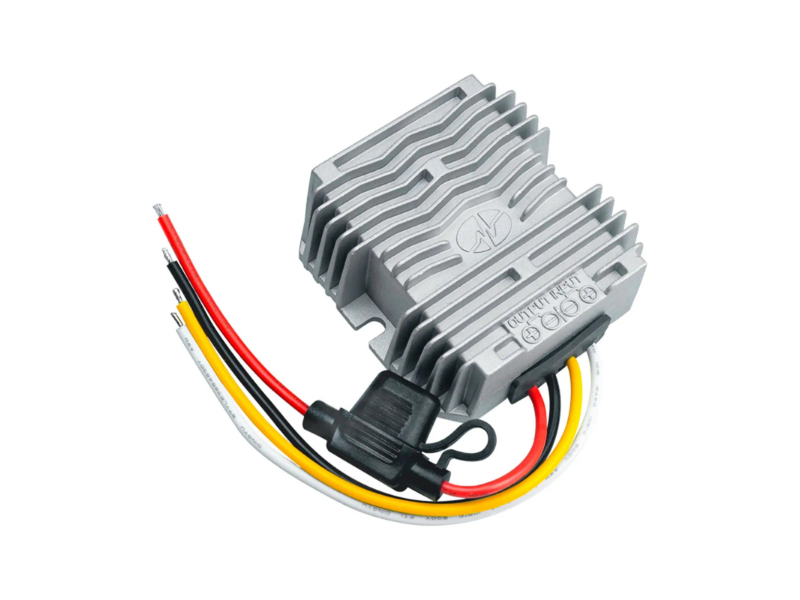
Critical Elements of Quality DC to DC Chargers.
Knowing what you know now, what else would you say distinguishes a DC to DC charger from the other products of its kind? First, What is the voltage range? 36V to 90V is a range that a DC to DC charger should be able to accommodate, since any vehicle system would need something like that in the case of a truck. Isolation is a critical feature to any system. An isolated charger would be able to protect from electric shocks or short circuits better than a standard unit.
This is critical in severe environments such as marine applications where dampness, moisture, and vibrations are present all at the same time.
Other factors to consider include the build quality and safety certifications. Ask yourself whether the charger would be able to function optimally in an RV. It’s rugged and able to withstand dusty conditions, temperature variations, and vibrations. Also, look for features such as overload protection and reverse polarity protection. If features such as reverse polarity protection and thermal shutdown are in the charger, these are not just fancy words, these are your safety net in case of accidents. If the charger has surge protection, the sudden increase in energy will not lead to impairment of the batteries. It also goes without saying that the efficiency ratings are a very important consideration. An efficient batt charger, which in this case is over 90% efficiency, will have a bigger and better charge to energy ratio as this means that there is less energy being dissipated in the form of heat. This will lead to faster charging and an overall reduction of fuel consumption in the vehicle, given that the alternator will not be overworked. Also, consider the ease of use which comes through features such as detailed wiring diagrams and plug-and-go options which simplify the installation process. No one would like to spend an entire day trying to figure out a wiring puzzle. To conclude, a DC to DC charger should have versatility in application along with maximum safety and efficiency ratings for use during critical times.
Real World Scenarios: Applications and Advantages
How can a DC to DC charger be applied and what advantages does it provide? Let’s review some use cases. Its usefulness to RV and camper drivers is extraordinary. Imagine yourself parked in the middle of nowhere and your devices, fridge or even lights need to be powered up. With a DC to DC charger, you can run your vehicle's engine and charge the starter and auxiliary batteries at the same time. You can enjoy the outdoors without sacrificing comfort. No need to plug your devices to a charging station. Similarly, other vessels such as fishing boats also benefit from the compact and lightweight design of such a charger. With its ability to power up navigation devices, radios and other electronics, you can reduce the risk of being stranded with dead batteries. This can be a lifesaver as it can be dangerous to run out of batteries in the middle of the ocean.
Telecommunication calls and solar power systems rely on them as well. Cell towers and remote solar powered setups rely on DC to DC chargers to manage battery banks by controlling charge cycles to generators and solar panels. It becomes vital to sustain service in the region where the grid is absent. The benefits come in the shape of cost or money efficient measure and its environment friendly feature of being able to charge battery systems. It is disabling to know that advanced technologies and systems is not being ignited due to fuel burning and gas emissions. Battery systems come with duel battery chargers that put limitations to the overworking of alternators. Power consumption reduces and so is the cost of their maintenance because the alternators tend to be worn down over use. This is also the case with lithium batteries that are slowly taking over the market as they provide less weight with greater battery back up. A proficient DC to DC charger helps in battery charging without dehydrating or lead acid batteries and also prevents over charging, charging of bled acid batteries is often sulfated. For enthusiasts and even experts in the field, the piece brings with it conviction and reliability on the system.
Tips for Choosing the Right DC to DC Charger
How to choose the most suitable DC to DC charger? One selections step starts from evaluating the power needed for auxiliary batteries to be able to supply – from the one for appliances in your RV to the one for equipment in your boat. For example, a charger with 10 Amperes suffices for moderate use for multiple 12 Volt Lithium batteries, but for heavier use, a higher charger amp will be needed. What is also important, is the compatibility of the input voltage with the system of the vehicle. For example, if a vehicle charger is versatile, having a broad input range is a plus, 36V to 90V for example, is a plus if you drive different type vehicles. Again, be sure to check functionality, do not focus either on the cheapest or just specs. Make sure to analyze the real-word reviews as other folks can share their experiences, like Noise Interference or issues with other functionality durability, that specs do not elaborate on.
Another hint is to prioritized safty features. It is best to find chargers with certifications from a recognized body, as they have tested them. Ease of installation is another consideration. Choose chargers with simple step-by-step guides and friendly terminals to minimize irritation. If you are not tech proficient, find brands that have great customer service, and have guides. Last, consider future proofing. A DC to DC charger that is modular, or that has upgrade options, will save you from replacements when new battery technologies, such as the new lithium types, are developed. Remember, a bit of research, and comparisons will save you headaches in the future. Consult with experts in forums and communities. The tips provided will give you a DC to DC charger that is perfect for your lifestyle, and performs consistently, providing value for your money.
Recommended Products
Hot News
-
Application Advantages of Non-Isolated BUCK Converters Compared to Isolated Step-Down Converters
2024-01-23
-
DC-DC Converters Showcase Remarkable Advantages in Outdoor Off-Grid Applications
2024-01-23
-
DC to DC Battery Charger - Wide input and Noise immunity for dual battery system applications
2024-01-19