 EN
EN
 AR
AR
 BG
BG
 HR
HR
 CS
CS
 DA
DA
 NL
NL
 FI
FI
 FR
FR
 DE
DE
 EL
EL
 HI
HI
 IT
IT
 JA
JA
 KO
KO
 NO
NO
 PL
PL
 PT
PT
 RO
RO
 RU
RU
 ES
ES
 SV
SV
 CA
CA
 TL
TL
 IW
IW
 ID
ID
 SR
SR
 SK
SK
 UK
UK
 VI
VI
 HU
HU
 TH
TH
 TR
TR
 FA
FA
 AF
AF
 MS
MS
 GA
GA
 HY
HY
 BN
BN
 MN
MN

The Role of Automatic Voltage Regulators in Industrial Automation
Core Functions of Automatic Voltage Regulators
Maintaining Stable Power Supply
Automatic Voltage Regulators (AVRs) play an essential role in ensuring a stable power supply by continuously monitoring and adjusting voltage levels. They employ advanced feedback mechanisms that enable them to make real-time corrective adjustments. This capability helps prevent voltage sags and surges, which are commonly responsible for damaging sensitive equipment. An automatic regulator voltage is particularly crucial in settings where maintaining consistent power is vital. Supporting this, empirical studies reveal that facilities equipped with AVRs experience up to a 30% reduction in equipment failures related to power quality issues. This underscores the importance of AVRs in protecting and optimizing the performance of various electrical equipment.
Mitigating Voltage Fluctuations in Industrial Systems
Voltage fluctuations in industrial environments can lead to substantial operational disruptions; hence, AVRs are specifically engineered to mitigate these irregularities effectively. These devices stabilize voltage levels, thereby enhancing the reliability of power supply in industrial settings and contributing to increased productivity. Empirical data from industrial case studies further highlights the economic benefits of AVRs; implementing these systems can lower energy costs by approximately 15% thanks to reduced energy waste on reactive power. This improvement not only helps in cost savings but also supports sustainable energy practices by optimizing power usage. Automatic Voltage Regulators thus provide valuable tools in enhancing the efficiency and longevity of industrial systems.
Why Voltage Regulation is Critical for Industrial Automation
Preventing Equipment Downtime
Voltage regulation plays a crucial role in preventing equipment downtime, which can be costly for industrial systems. Ensuring a consistent voltage supply is vital for minimizing unexpected shutdowns of machinery and processes. Industry reports highlight that operations equipped with Automatic Voltage Regulators (AVRs) experience 25% less downtime compared to those without. This reduction in downtime translates into increased productivity and fewer interruptions, fostering a smoother industrial workflow. For example, a factory utilizing AVRs might avoid costly delays and repairs, which boosts operational efficiency and saves on labor costs.
Ensuring Precision in Sensitive Machinery
In industrial automation, precise voltage levels are essential for the optimal performance of sensitive machinery. Effective voltage regulation ensures these precise conditions, especially crucial in automated processes and robotics. AVRs contribute significantly to maintaining the necessary voltage levels that sensitive equipment demands for peak functionality. Quality assurance studies have shown that systems operating under regulated voltage conditions achieve product quality improvements of up to 20%. This precision in voltage regulation results in enhanced machinery performance, ensuring that delicate operations run smoothly without the risk of undervoltage or overvoltage damages.
Energy Efficiency Benefits
Efficient voltage regulation is not only about conserving power but also about realizing substantial energy savings for industrial enterprises. Automatic Voltage Regulators improve the overall power factor by influencing how electricity is used, which reduces waste and improves operational costs. Research indicates that businesses implementing voltage regulators can achieve energy efficiency improvements of approximately 10-15%. This enhancement leads to cost savings on energy bills while reducing the carbon footprint. Moreover, optimizing power usage through AVRs supports the goal of energy efficiency by ensuring that only the required amount of power is utilized, promoting sustainable industrial practices.
Reliable 60V to 12V 20A DC-DC Power Converter Overview
Key Features: 95.4% Efficiency & Wide Voltage Range
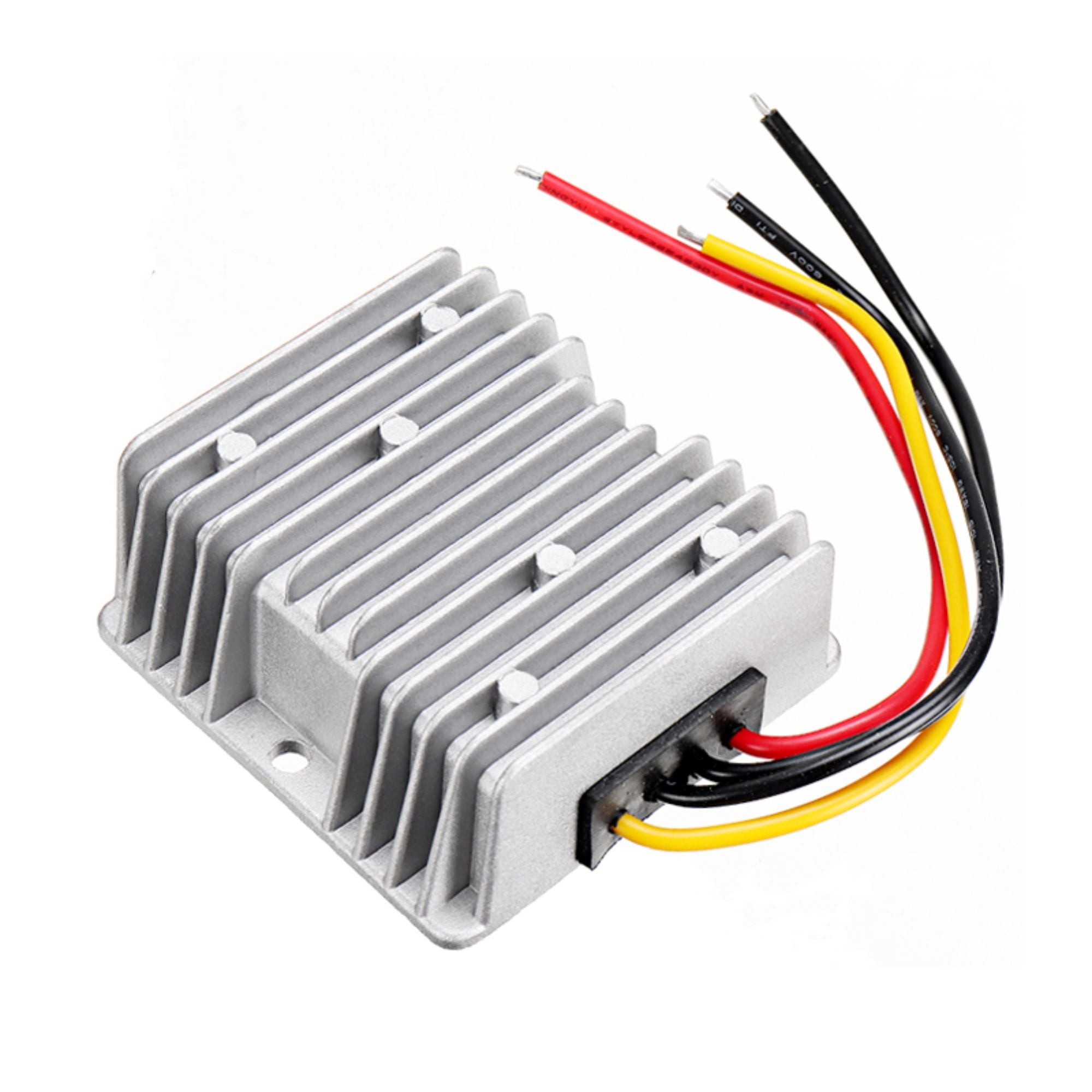
The 60V to 12V 20A DC-DC power converter stands out for its remarkable efficiency rate of 95.4%, significantly minimizing energy loss. Such high efficiency is crucial in applications where minimizing waste is paramount, ensuring that energy is used effectively across various devices and systems. Moreover, its wide input voltage range from 30 to 75 volts allows it to be used in multiple sectors, accommodating diverse power needs. Studies have shown that utilizing high-efficiency converters like this can substantially reduce electricity costs, proving beneficial for operations aiming to optimize their energy expenditure while maintaining reliability.
Applications in Golf Cart Systems & Harsh Environments
This converter is particularly suitable for applications in golf cart systems, providing a steady power supply essential for smooth operations. Its robust design, featuring waterproof, dust-proof, and shockproof capabilities, ensures it performs reliably even in harsh and outdoor environments. Feedback from industry experts underscore the converter’s reliability in extreme conditions, contributing significantly to the enhanced performance and longevity of the devices it powers. Such versatility and durability are invaluable for applications where environmental conditions cannot be controlled, highlighting the importance of choosing a converter that can withstand challenging operational settings.
Choosing the Right Voltage Regulator
Ferroresonant vs. Tap Switching Regulators
When choosing a voltage regulator, understanding the distinction between ferroresonant and tap switching regulators is essential. Ferroresonant regulators are known for their superior voltage stability, making them an optimal choice for critical applications where consistent performance is non-negotiable. However, they tend to be bulkier than tap switching regulators. On the other hand, tap switching regulators are more compact and economical. They use solid-state circuits to adjust transformer taps quickly, though this rapid response may lead to instability in power supplies with sensitive equipment like switch-mode power supplies. Ultimately, for applications requiring high stability and reliability, ferroresonant regulators may be preferred, despite their larger size.
Buck-Boost Technology for Heavy Loads
Buck-boost technology is highly effective in scenarios demanding voltage adjustment in both directions, ensuring voltage stability across varying load conditions. This versatility makes it indispensable in industrial environments where equipment must often handle heavy loads. By dynamically adjusting the voltage, buck-boost regulators can optimize power delivery to sustain functionality even during fluctuations. Experts highlight that these regulators bolster efficiency by fine-tuning voltage output to match real-time demands. Consequently, heavy machinery and industrial automation systems often integrate buck-boost technology to prevent performance degradation due to inconsistent voltage levels. Integrating a buck-boost system can significantly enhance the operational resilience and efficiency of critical industrial operations.
Compliance & Cybersecurity in Modern AVRs
ABB UNITROL 1000: DNV Cyber Security Certification
ABB UNITROL 1000 stands out for its compliance with DNV cybersecurity standards, which are crucial for ensuring operational safety. This certification provides assurance that the device can effectively mitigate cyber threats, a growing concern as industries continue to integrate digital solutions into their operations. Independent assessments have confirmed that adherence to these cybersecurity standards significantly reduces vulnerabilities within power systems, thus making the ABB UNITROL 1000 a reliable choice for industrial sectors increasingly relying on digital technologies. Such conformity is indispensable as the integration of digital infrastructures in power systems becomes more prevalent.
Overall, adhering to DNV cybersecurity standards not only minimizes vulnerabilities in power systems but also ensures operational safety. This is crucial for industries continuously moving toward digital transformations.

Meeting IACS UR E26 Standards
Compliance with IACS UR E26 standards is paramount for ensuring the safety and effectiveness of automatic voltage regulators (AVRs). These standards focus on regulating the proper functioning and safety measures necessary for AVRs used in marine power systems. Meeting these standards is not just a regulatory requirement, but a fundamental aspect of maintaining reliability in marine power systems, a sector progressively embracing modern technological integration.
Data from various industry reports suggest that the standards focus on regulating the proper functioning and safety measures necessary for AVRs used in critical marine power systems. Meeting these standards is not just a regulatory requirement, but a fundamental aspect of maintaining reliability in marine power systems. The strict guidelines and rigorous testing procedures required by the IACS standards help in achieving robust and dependable power system performance in marine environments. As the maritime sector embraces the wave of digital transformation, the importance of aligning automatic voltage regulators with these standards becomes even more evident.
Recommended Products
Hot News
-
Application Advantages of Non-Isolated BUCK Converters Compared to Isolated Step-Down Converters
2024-01-23
-
DC-DC Converters Showcase Remarkable Advantages in Outdoor Off-Grid Applications
2024-01-23
-
DC to DC Battery Charger - Wide input and Noise immunity for dual battery system applications
2024-01-19