 EN
 AR
 BG
 HR
 CS
 DA
 NL
 FI
 FR
 DE
 EL
 HI
 IT
 JA
 KO
 NO
 PL
 PT
 RO
 RU
 ES
 SV
 CA
 TL
 IW
 ID
 SR
 SK
 UK
 VI
 HU
 TH
 TR
 FA
 AF
 MS
 GA
 HY
 BN
 MN

Implementing Bidirectional DC Chargers: A 2026 Guide
A bidirectional dc fast charger is not simply a conventional charger with a reverse-current setting. It is a controlled DC power connection that must manage energy in both directions while protecting the battery, vehicle or storage system, DC bus, people, and connected site equipment. In 2026, teams evaluating a bidirectional dc fast charger should begin with the intended operating boundary rather than a headline power rating.
From a system-integration perspective, implementation is a sequence of requirements definition, electrical design, communication validation, installation, and witnessed commissioning. If the input range and load conditions are stable, that sequence is a useful starting point; if they are not, the design team should document the exceptions before selecting equipment.
Start by defining the energy-flow use case
The first question for a bidirectional dc fast charger project is where energy is expected to go in each permitted mode. A battery may accept charge from a DC source, supply a DC bus, support a stationary storage asset, or participate in a site-controlled export arrangement. Those are different operating cases, even if the hardware category sounds similar.
Write a one-page mode table before sizing the bidirectional dc fast charger. For every mode, identify the source, sink, voltage range, current limit, expected duration, enable signal, stop condition, and party allowed to command the transition. Include abnormal cases such as communication loss, emergency stop, isolation fault, cooling fault, and an unavailable downstream load. This makes later reviews more concrete than asking whether the charger is simply “bidirectional.”
Build the DC power-stage requirements
A bidirectional dc fast charger must remain inside the voltage and current limits of both sides of the connection. Capture minimum and maximum DC voltage, allowable ripple, inrush behavior, polarity protection, cable resistance, connector temperature limits, and the load profile. Nominal voltage alone is not enough: a battery-side voltage can change materially across state of charge, temperature, and operating mode.
Power is only one part of the review. A bidirectional dc fast charger also needs a defined current-ramp behavior so that direction changes do not create undesirable transients on the DC bus. Ask how the controller limits current, what measurement path it uses, and what occurs if a sensed value is outside the allowed range. The answer should distinguish normal control from a protective trip.
- Confirm the input and output voltage windows under normal and fault-adjacent conditions.
- Set continuous and short-duration current limits with their thermal basis.
- Review isolation, grounding, insulation monitoring, contactor sequencing, pre-charge, fusing, and fault clearing as one coordinated system.
- Document derating conditions for enclosure temperature, altitude, cable routing, ventilation, and duty cycle.
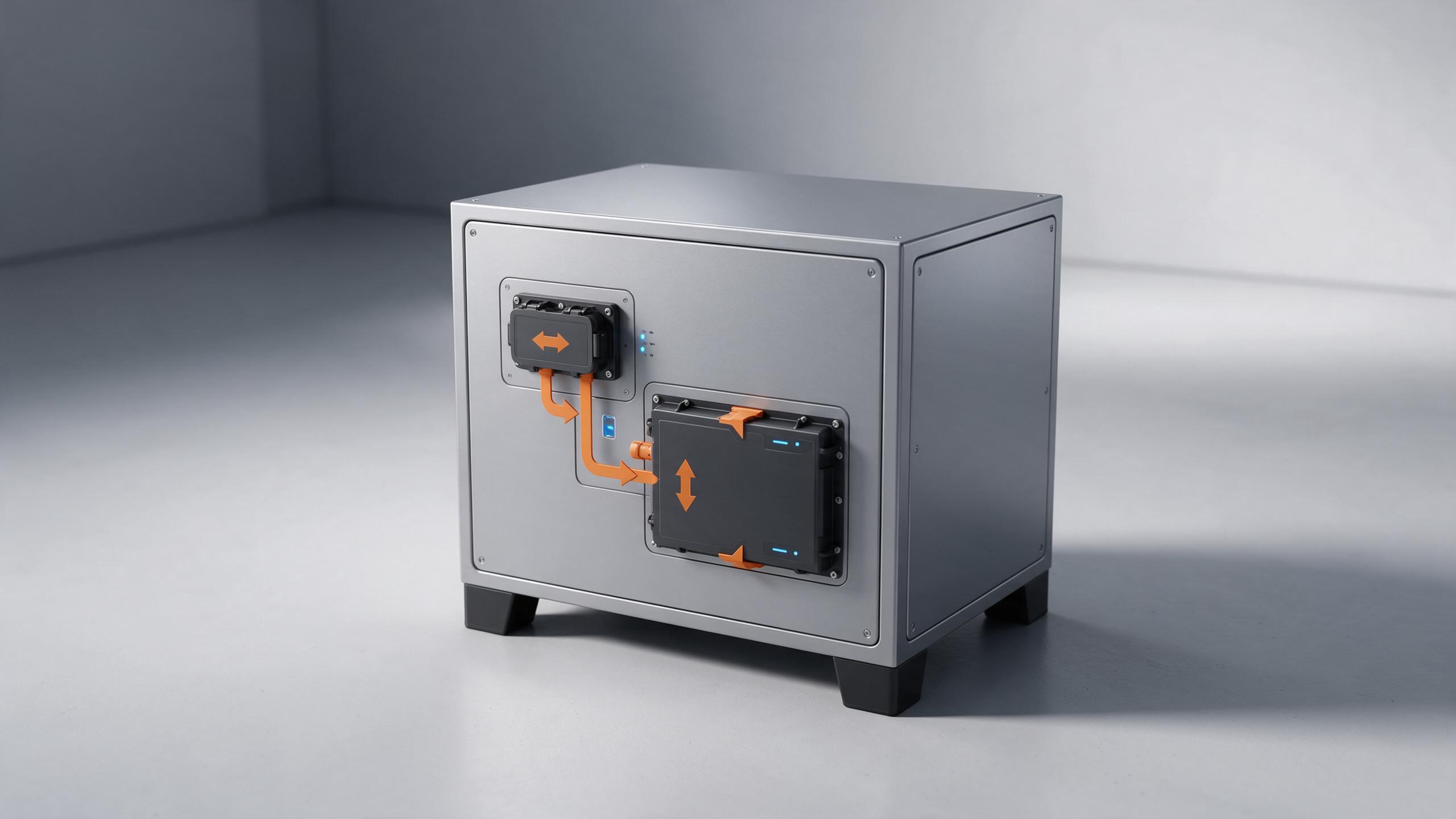
For a bidirectional dc fast charger, the electrical diagram should also show where energy can remain stored after a stop command. That detail affects safe servicing, discharge logic, and verification procedures.
Treat communication as a control dependency
Communication determines whether a bidirectional dc fast charger may enter a requested mode, not merely whether a display shows connected status. The relevant protocol set depends on the deployment. ISO 15118 is a communication standard series for vehicle-to-charger exchange, and ISO 15118-20 includes provisions for bidirectional charging control. Support on paper does not prove that a particular vehicle, charger, cable, firmware revision, or local operating program can use the same function.
Create an interoperability matrix for the bidirectional dc fast charger that lists the vehicle or battery connection method, connector family, protocol profile, firmware versions, certificates or credentials where applicable, meter data, supervisory controller, and fallback behavior. Test the state transitions that matter: authorization, charge start, charge stop, reverse-power request, controlled shutdown, and recovery after a communication interruption.
Plan site protection and operating authority
When a bidirectional dc fast charger connects to a building, microgrid, or utility-facing system, the project has a site-control question as well as an equipment question. Vehicle-to-grid use may support demand-management objectives, but whether export is allowed depends on local interconnection rules, metering, protection coordination, agreements, and the operating authority. Do not assume that an EV capable of charging can export power in the intended location.
Define a hierarchy for the bidirectional dc fast charger: local emergency controls must override remote commands; protection functions must override routine scheduling; and a failed supervisory connection must lead to a documented safe state. The site team should also decide who can change current limits, mode permissions, and firmware, and how those changes are recorded.
Use a commissioning plan, not an informal demonstration
A credible bidirectional dc fast charger commissioning plan turns the requirements table into observable tests. Begin with installation checks: conductor identification, torque records, grounding, insulation checks, cooling path, labels, clearances, emergency isolation, and software configuration. Then progress from low-risk functional tests to controlled energy transfer under reviewed conditions.
- Verify that the bidirectional dc fast charger rejects an invalid connector, polarity, or authorization state.
- Verify pre-charge and contactor sequencing before sustained power transfer.
- Measure current and voltage response during controlled ramps in each permitted direction.
- Test stop behavior for local stop, supervisory stop, communication loss, thermal alarm, and protective fault where safe procedures permit.
- Capture event logs, meter values, firmware versions, and acceptance criteria for handover.
Use witnessed test records rather than broad claims about performance. If a condition cannot be tested at site, record it as an open validation item with the required equipment, owner, and acceptance evidence.
Common implementation mistakes
A frequent mistake is treating a bidirectional dc fast charger as a product swap instead of a system change. Another is comparing nominal power ratings while leaving out voltage range, thermal conditions, protection coordination, and communication behavior. Teams also lose time when they discover late that a requested export mode needs permissions or controls outside the charger enclosure.
To avoid those gaps, keep a single requirements register for the bidirectional dc fast charger. Separate confirmed facts from assumptions, link every assumption to an owner, and update it after each design, installation, and test review. This approach is particularly useful when procurement, electrical engineering, and site operations are working from different documents.
A practical 2026 implementation checklist
Before approving a bidirectional dc fast charger, confirm the intended energy paths, DC voltage windows, current and thermal limits, protection concept, communications compatibility, connector and cable ratings, site authority, local approvals, metering, commissioning tests, and service documentation. Ask the supplier to map each claimed capability to the specific configuration and test conditions under consideration.
Shenzhen Wengao Electronic Co., Ltd. organizes DC power and charging discussions around input, output, load, installation, and verification conditions. For a bidirectional dc fast charger inquiry, provide the system diagram, permitted modes, voltage ranges, current targets, connection details, environment, and acceptance plan. That information supports a more focused technical discussion without assuming suitability before the full conditions are reviewed.
FAQ
Is a bidirectional DC charger the same as a DC fast charger?
Not necessarily. A bidirectional dc fast charger needs controlled, permitted power transfer in both directions. A charger described as fast may still operate in only one direction.
What must be verified before reverse power is enabled?
For a bidirectional dc fast charger, verify electrical limits, protection settings, communication states, site controls, meter behavior, and the applicable authorization or interconnection conditions.
Can one test prove every operating mode?
No. A bidirectional dc fast charger should be assessed against the modes and fault responses defined for the actual installation. Results from one configuration should not be generalized to untested vehicles, batteries, sites, or firmware versions.