 EN
EN
 AR
AR
 BG
BG HR
HR
 CS
CS
 DA
DA
 NL
NL
 FI
FI FR
FR
 DE
DE EL
EL
 HI
HI
 IT
IT JA
JA
 KO
KO
 NO
NO PL
PL PT
PT RO
RO
 RU
RU
 ES
ES
 SV
SV
 CA
CA TL
TL
 IW
IW
 ID
ID
 SR
SR
 SK
SK
 UK
UK VI
VI
 HU
HU
 TH
TH
 TR
TR
 FA
FA
 AF
AF
 MS
MS
 GA
GA
 HY
HY
 BN
BN
 MN
MN

Com milloren l'eficiència dels convertidors CC-CC en els sistemes d'alimentació de robòtica i drons?
Per què cada fracció de watt compta quan esteu en vol
Encara recordo la sensació d’angoixa quan vaig veure un dron prototip perdre altitud sobre un humenal costaner. Transportava una càmera multiespectral per a un projecte de monitoratge ambiental, i cada gram de càrrega útil s’havia calculat minuciosament. Deu minuts després de l’enlairament, el nivell de bateria va baixar molt més ràpid del que es preveia. Una anàlisi tèrmica posterior al vol va revelar la causa: un regulador lineal de tensió a la placa principal de control funcionava a més de vuitanta graus Celsius, convertint energia valuosa de la bateria en calor que no feia res més que escalfar l’envolvent de plàstic. Aquell dia em va ensenyar que, en un robot volador, l’eficiència elèctrica no és una especificació abstracta. És la diferència entre aterrar amb les dades o aterrar a l’aigua. Els sistemes de propulsió i d’alimentació elèctrica per a robots i drons concentren una immensa densitat funcional en plataformes petites i lleugeres. Cada watt malgastat en la conversió de tensió és un watt que no pot fer girar un motor, fer funcionar un sensor lidar o transmetre vídeo. 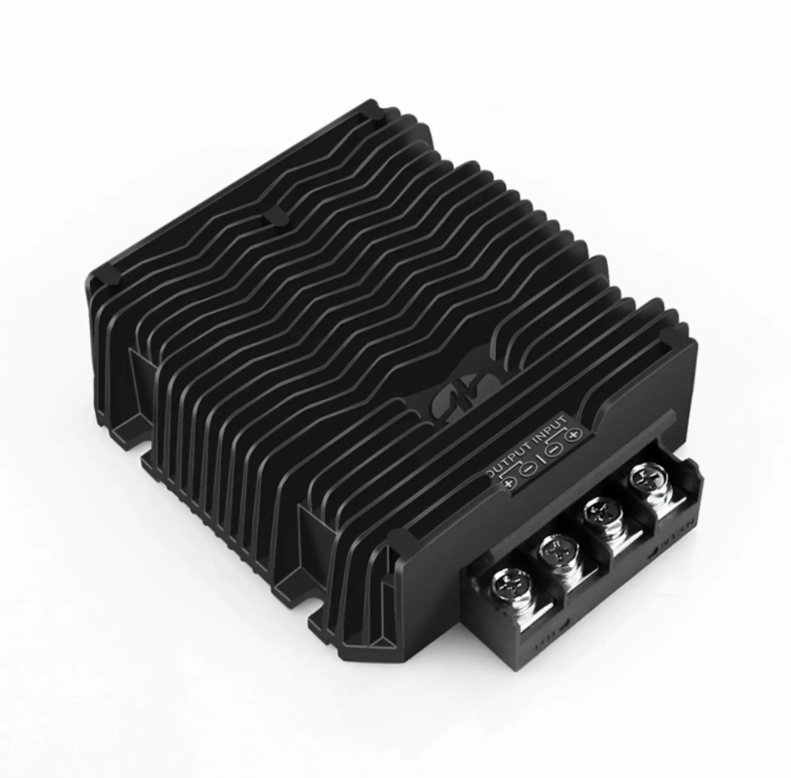
El motor de conversió que adapta la tensió de la bateria a cada càrrega
Una bateria de dron pot tenir vint-i-dues voltes d’un paquet de sis cel·les de litium, però el controlador de vol necessita tres coma tres voltes, el mòdul de càmera exigeix cinc voltes i un servo pot necessitar un rail separat de dotze voltes. Sense una conversió eficient de tensió, aquestes diferències es converteixen en problemes tèrmics greus. Els reguladors lineals dissipen la tensió excedent en forma de calor, un mètode que pot malgastar del quaranta al seixanta per cent de la potència d’entrada quan la diferència de tensió és gran. Els convertidors CC-CC basats en topologies commutades inverteixen aquesta equació. Mitjançant l’ús d’un transistor, una bobina i un condensador per tallar i allisar el flux d’energia, els convertidors reductors moderns assolen habitualment rendiments superiors al noranta-dos per cent. La rectificació sincrònica, que substitueix un díode amb pèrdues per un MOSFET de baixa resistència, eleva aquest percentatge fins al noranta-sis per cent en alguns dissenys. A més, els convertidors d’ampli rang d’entrada permeten als drons funcionar amb la caiguda natural de tensió d’una bateria en descàrrega sense pèrdues de rendiment, mantenint el parell i la resposta de control constants fins que s’extreu l’últim watt útil.
Estalvi de temps de vol eliminant la calor en lloc de traslladar-la
Els guanys d'eficiència en la conversió d'energia fan més que reduir la factura d'electricitat. En una plataforma aèria, cada watt estalviat en la conversió és calor que no cal dissipar. La gestió tèrmica afegeix pes en forma de dissipadors de calor, ventiladors o carcasses d'alumini pesades. Els enginyers d'aplicacions dels fabricants de semiconductors sovint il·lustren aquest compromís amb un simple pressupost energètic: un estalvi de cinc watts en les pèrdues del convertidor pot traduir-se en quatre o cinc minuts addicionals de suspensió per a un quadricòpter típic d'inspecció, suposant una estructura aèria de tres quilograms i una bateria de sis ampere-hora. Durant un any de vols diaris d'inspecció, aquesta única decisió de disseny pot estalviar centenars d'hores de cicles de càrrega i retardar el reemplaçament de la bateria durant mesos. El càlcul és senzill. Una major eficiència de conversió redueix els requisits de massa tèrmica i allarga l'energia disponible cap a la càrrega útil real de la missió.
Energia neta com a fonament de la fiabilitat dels sensors i del control
Els números d’eficiència per si sols no expliquen tota la història. La qualitat de la potència de sortida procedent d’un convertidor CC-CC afecta directament l’estabilitat de cada sensor i processador situats a continuació. Els convertidors commutats generen tensió d’ondulació i interferències electromagnètiques per la seva mateixa naturalesa. Sense un filtratge adequat, aquest soroll s’acopla a circuits analògics sensibles. Un receptor GPS pot perdre el bloqueig a causa d’emissions conduïdes que es propaguen per la línia d’alimentació. Una unitat de mesura inercial pot informar d’acceleracions fantasma causades per soroll de nivell mil·livolt. Normes com la IEC 61000 estableneixen límits per a emissions conduïdes i irradiades, però la interpretació pràctica per a un dissenyador de drons és senzilla: com més neta sigui l’alimentació, més fiable seran les dades de navegació. Els mòduls CC-CC d’alta qualitat utilitzen la modulació d’espectre estès, filtres LC integrats i una disposició cuidadosa del circuit imprès (PCB) per reduir el soroll fins a l’interval d’un sol dígit en mil·livolts. Aquesta cadena d’alimentació neta permet que un robot pensi amb claredat mentre els seus motors i inversors generen el seu propi soroll elèctric intens.
Una lliçó de disseny apresa quan un dron va perdre el camí
Dos anys després d’emprar drons autònoms per a enquestes, el meu equip es va topar amb una greu barrera de fiabilitat. Aproximadament en un de cada dotze vols, la unitat RTK GPS perdia la seva solució fixa durant la missió i tornava a una localització aproximada, arruinant la precisió a nivell de centímetres que havíem promès als nostres clients agrícoles. Sospitavem tot, des del posicionament de l’antena fins als errors del firmware. Finalment, vam analitzar la línia d’alimentació amb un oscil·loscopi i vam detectar pics periòdics d’aproximadament vuitanta mil·livolts procedents d’un mòdul buck que havíem adquirit d’un proveïdor de catàleg de baix cost. L’inductor sense escorça d’aquest mòdul irradiava directament cap al cable de l’antena GPS. Canviar-lo per un convertidor CC-CC completament tancat, de baix soroll, amb escorça metàl·lica i una millor regulació de sortida va resoldre el problema de forma immediata. Mai més vam perdre una correcció RTK. Aquesta experiència va redefinir tota la nostra filosofia d’adquisició: el convertidor d’alimentació no és un producte genèric; és un component crític que determina directament la fiabilitat del sistema.
Per què la coherència en la fabricació converteix un bon disseny en un gran producte
Quan una empresa de robòtica passa del prototip a la producció, cada convertidor CC-CC de cada placa ha de funcionar de manera idèntica. La tolerància dels components, la qualitat de la soldadura i les proves per lots es converteixen en la fonament invisible de la reputació d’un producte. Un convertidor que ofereix un rendiment del noranta-cinc per cent a la bancada d’enginyeria, però que baixa fins al vuitanta-nou per cent en una unitat aleatòria del primer lot de producció, genera una pesadilla de fallades intermitents al camp i devolucions costoses. Aquí és on la capacitat de fabricació profunda distingeix els socis fiables dels proveïdors merament transaccionals. Rcnun, especialista en mòduls de conversió de potència, integra aquesta disciplina en tota la seva operativa. Des del disseny de magnètics i el traçat de PCB fins al muntatge SMT i les proves automatitzades de càrrega completa (burn-in), Rcnun garanteix un rendiment consistent en milers d’unitats. Per a les marques de drons i robòtica, treballar amb un fabricant com Rcnun significa que l’arquitectura de potència s’escala des del laboratori al camp sense sorpreses desagradables, assegurant que cada plataforma sigui eficient, lleugera i preparada per a la missió.
Productes recomanats
Notícies destacades
-
Vantages d'aplicació dels convertidors BUCK no aïllats en comparació amb els convertidors a pas a baix aïllats
2024-01-23
-
Els convertidors de CC-DC mostren avantatges notables en aplicacions fora de la xarxa
2024-01-23
-
Carregador de bateries de CC a DC - Amplia entrada i immunitat al soroll per a aplicacions de sistema de bateries dobles
2024-01-19